
Asia Update - 2/27/26

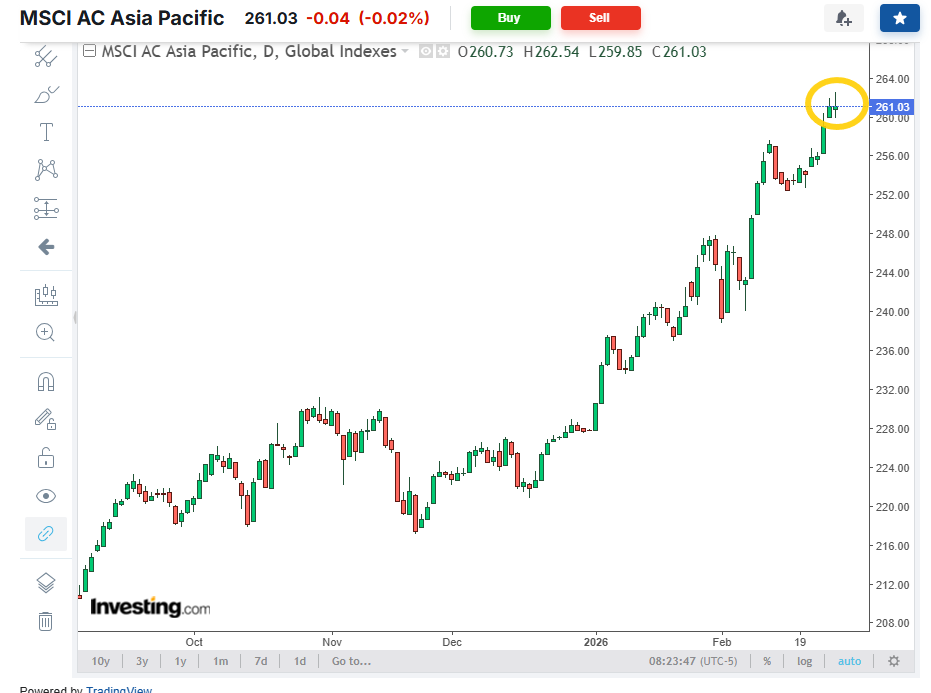
The MSCI Asia Pacific Index took a pause in its push into record territory on Friday but still secured its 10th weekly gain in 11 weeks (and 12th in 14). It was also its 9th monthly gain in the last 10 months.
Major equity indices in the Asia-Pacific region ended the week on a mostly higher note while South Korea's Kospi (-1.0%) hit a fresh record high before reversing.
Japan's Nikkei: +0.2%, Hong Kong's Hang Seng: +1.0%, China's Shanghai Composite: +0.4%, India's Sensex: -1.2%, South Korea's Kospi: -1.0%, Australia's ASX All Ordinaries: +0.3%.
In news:
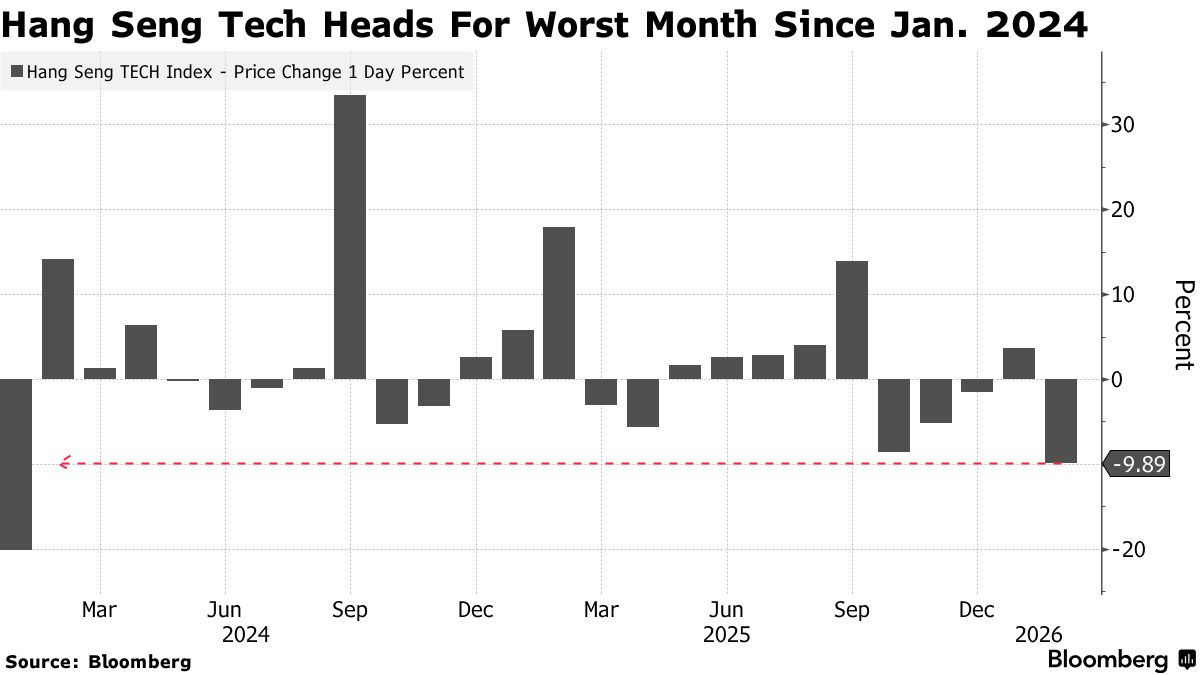
BBG - Chinese technology stocks in Hong Kong are poised for their worst month in two years, weighed by weak earnings and a lack of buying by mainland investors.
The Hang Seng Tech Index has dropped 10% in February, set for the biggest monthly decline since January 2024. The gauge is now deep in a bear market, having tumbled nearly 23% from an October high.
“The market is shifting from growth-at-all-cost to profitability and cash flow — punishing unprofitable or weak-margin names,” said Ravi Wong, first vice president at Yan Yun Family Office (HK) Ltd. The index is facing earnings concerns due to AI investment drag and cost pressure, as well as intensified competition as incremental growth is harder, he said.
Tech stocks are also losing support from mainland investors, who had earlier piled into the country’s tech champions. They sold HK$7.4 billion ($946 million) worth of stocks traded in Hong Kong on Thursday, adding to the HK$4 billion of such sales the previous day and marking the heaviest outflow since a record in late August.
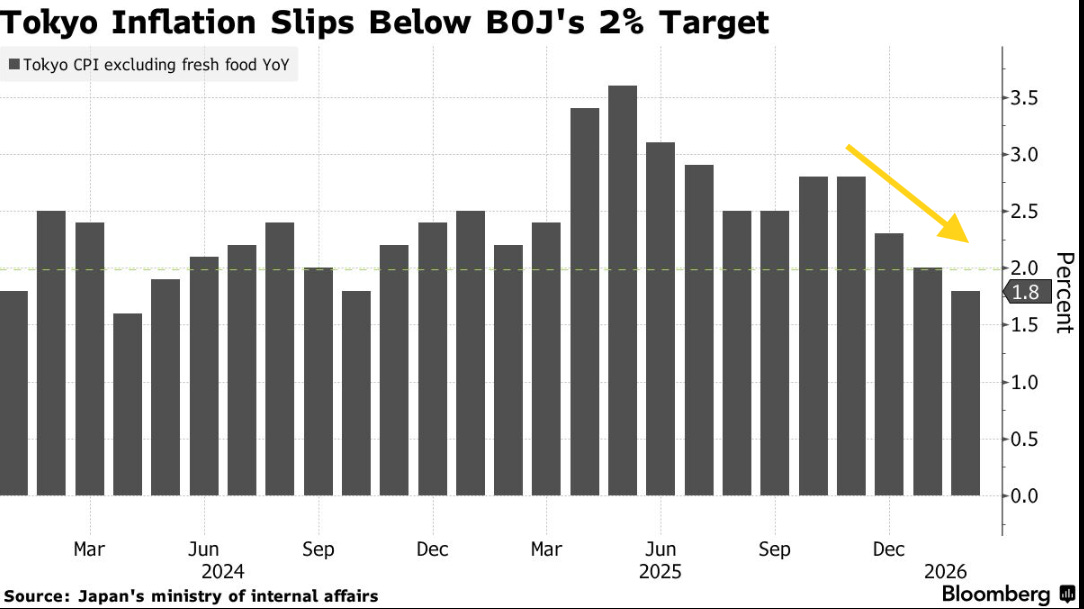
BBG - Consumer prices excluding fresh food rose 1.8% in Tokyo (which has a very high correlation to the full country) from a year earlier in February, the smallest gain since October 2024.
While a touch stronger than the median economist forecast of 1.7%, it adds more evidence that Japan’s price growth has entered a cooler phase largely owing to Takaichi’s anti-inflation steps and slowing growth in food costs and another layer of complexity to any potential rate hike by the BoJ.
“This report makes almost certain that national core CPI will also come in under 2% this month,” said Yoshiki Shinke, senior executive economist at Dai-Ichi Life Research Institute. “As inflation decelerates, that will present a communications challenge for the BOJ to justify a rate hike,” Shinke said. “So they will likely need to get more creative.”
“It makes sense for the BOJ to wait until June or July to carefully watch the impact of rate hikes but I won’t be surprised if they move by April,” Shinke said.
But a measure that also strips out energy to reflect the underlying strength of the inflation trend increased 2.5%, staying above the BOJ’s 2% target, an outcome that supports the central bank’s view that the inflation trend remains intact. The report showed that energy prices dropped 9.2% from a year earlier as the impact of the government’s three-month subsidy program to lower electricity and gas bills took effect in January.
Economy Minister Kiuchi said that signs of inflation are slowing and that real wages should turn positive soon.
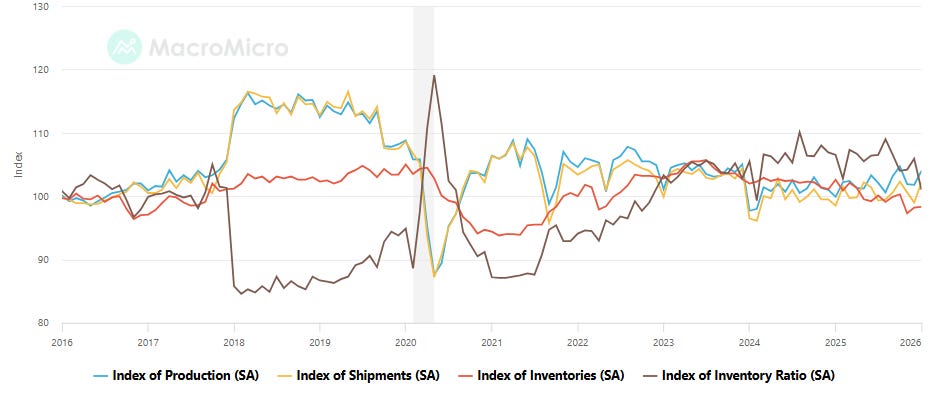
In other releases Friday, factory output rose a weaker-than-expected 2.2% in January from the previous month, led by gains in vehicle production and plastics, the Ministry of Economy, Trade and Industry reported. That compared with a consensus forecast for a 5.5% gain. Output rose 2.3% from a year earlier.
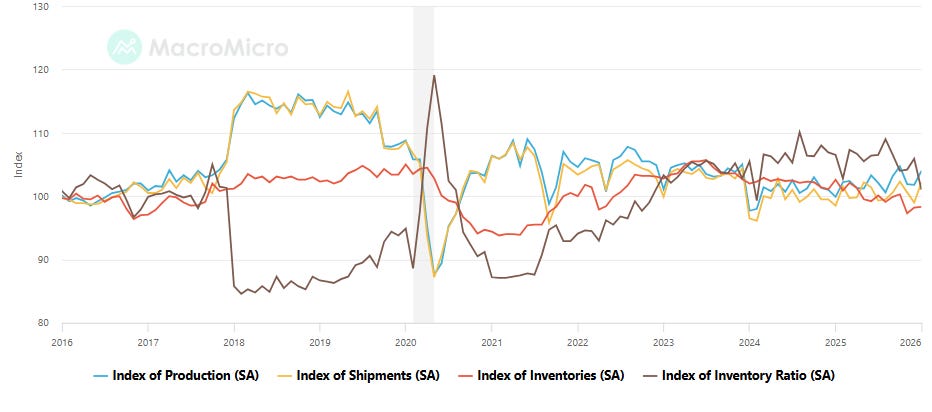
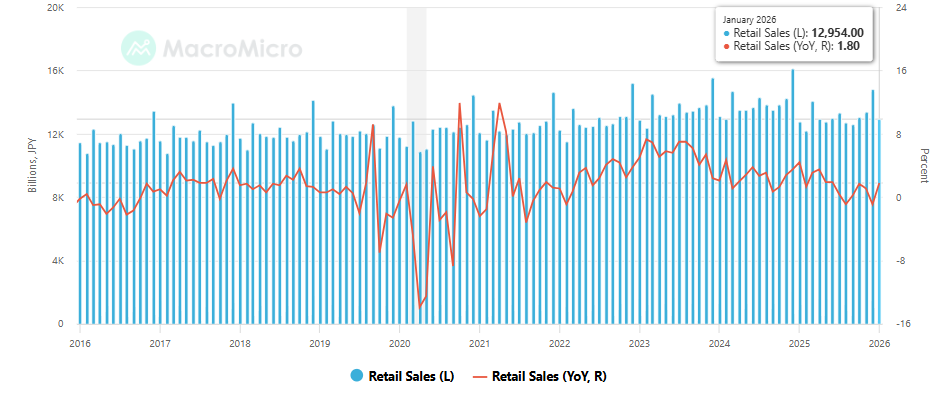
Retail sales gained 4.1% in January compared with the previous month, coming in above expectations. Still, the year-on-year gain of 1.8% again failed to outpace core inflation an indication that the central bank needs to keep an eye on how consumption is responding to rising prices.
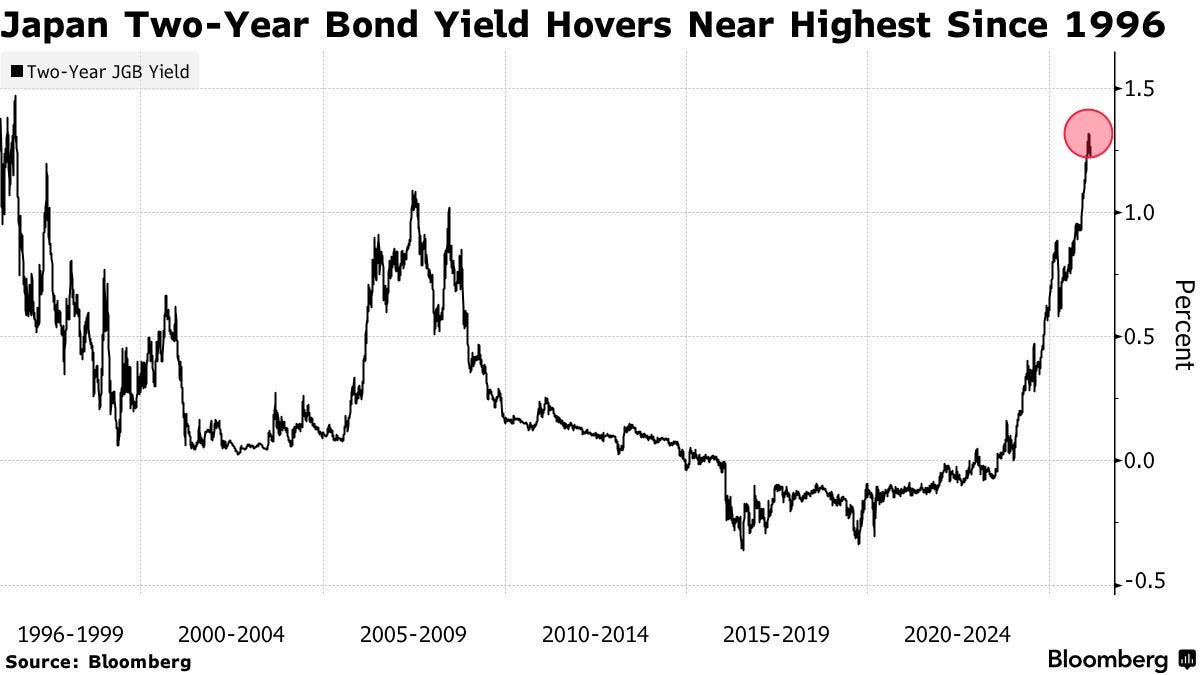
BBG - Japan’s two-year government bond auction passed through smoothly as investors mull the Bank of Japan’s rate-hike path.
“The auction had decent demand,” said Miki Den, a senior rates strategist at SMBC Nikko Securities. “While the next rate hike by the BOJ is seen as possible, there are growing views that another hike after that would be difficult under the Takaichi administration.”
The swap market shows about a 70% chance of a rate hike by April after the Bank of Japan’s most hawkish board member renewed his call for raising the benchmark interest rate. That reversed moves seen on Wednesday after Prime Minister Sanae Takaichi nominated two new monetary policy board members who are seen as dovish.
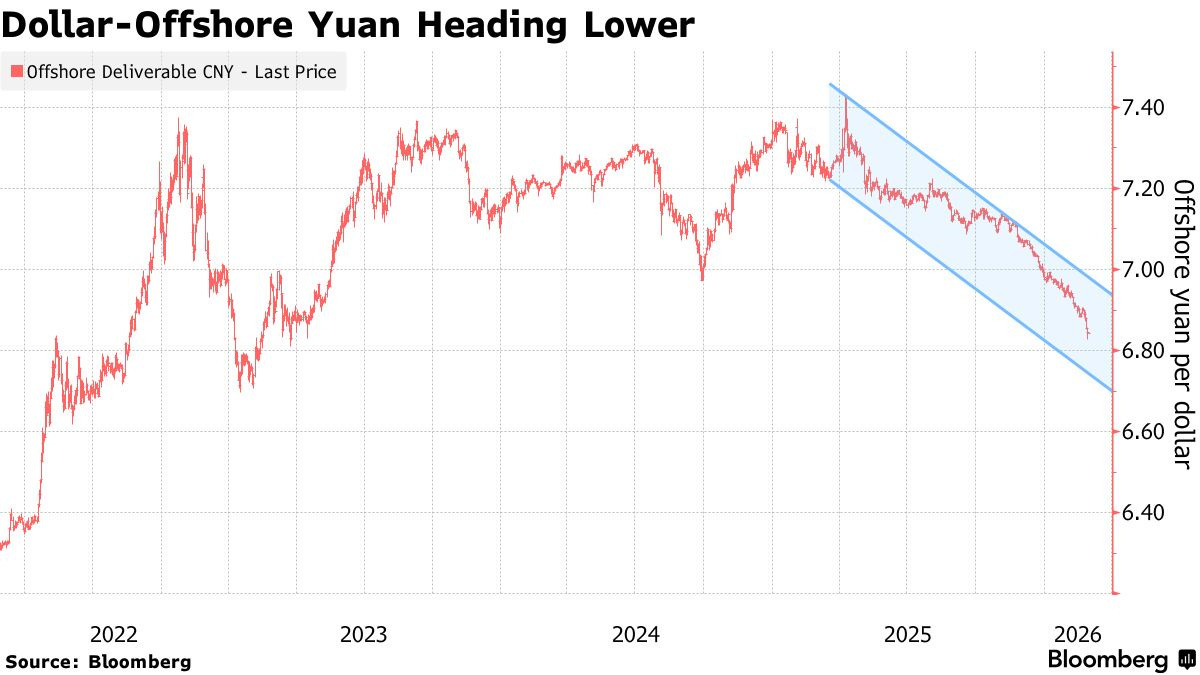
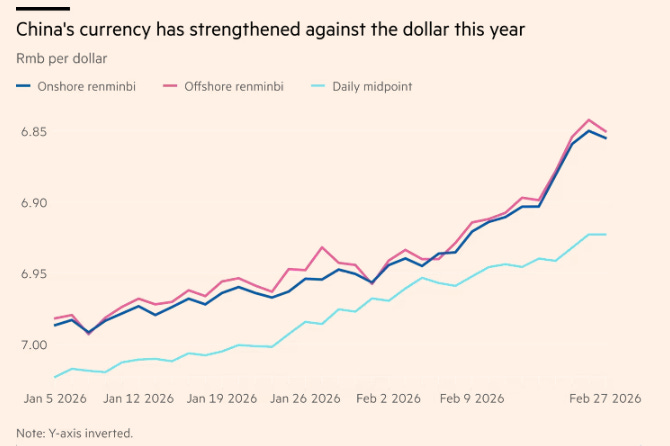
BBG - Bets on a stronger yuan are picking up in currency-option markets, with traders positioning for a move toward 6.50 per dollar by year end after the People’s Bank of China signaled greater tolerance for appreciation.
Trading in dollar-yuan options surged on Thursday to its highest since at least before President Donald Trump’s re-election in November 2024, with positioning tilted sharply for the Chinese currency to advance, including some bets of around 5%. Put option volumes worth $100 million or more — wagers on yuan gains — was double that of calls that profit from a decline, according to data from the Depository Trust & Clearing Corp.
Still the FT reports that authorities are taking steps to to slow the renminbi’s advance as its rapid appreciation tests Beijing’s tolerance for a stronger currency that could threaten its export-oriented economy.
The People’s Bank of China on Friday said it would scrap a reserve requirement of 20 per cent for forward contracts selling the renminbi. This makes it cheaper for traders to bet on a weakening Chinese currency.
The reserve requirement that the central bank scrapped on Friday was put into effect in 2022, when the renminbi fell more than 7 per cent against the dollar, to fight depreciation pressure.
“They’re taking some measures to slow the pace,” said Andrew Tilton, chief Asia-Pacific economist and head of emerging market economic research at Goldman Sachs. “They don’t want to create a sustained one-way trade for the market.”
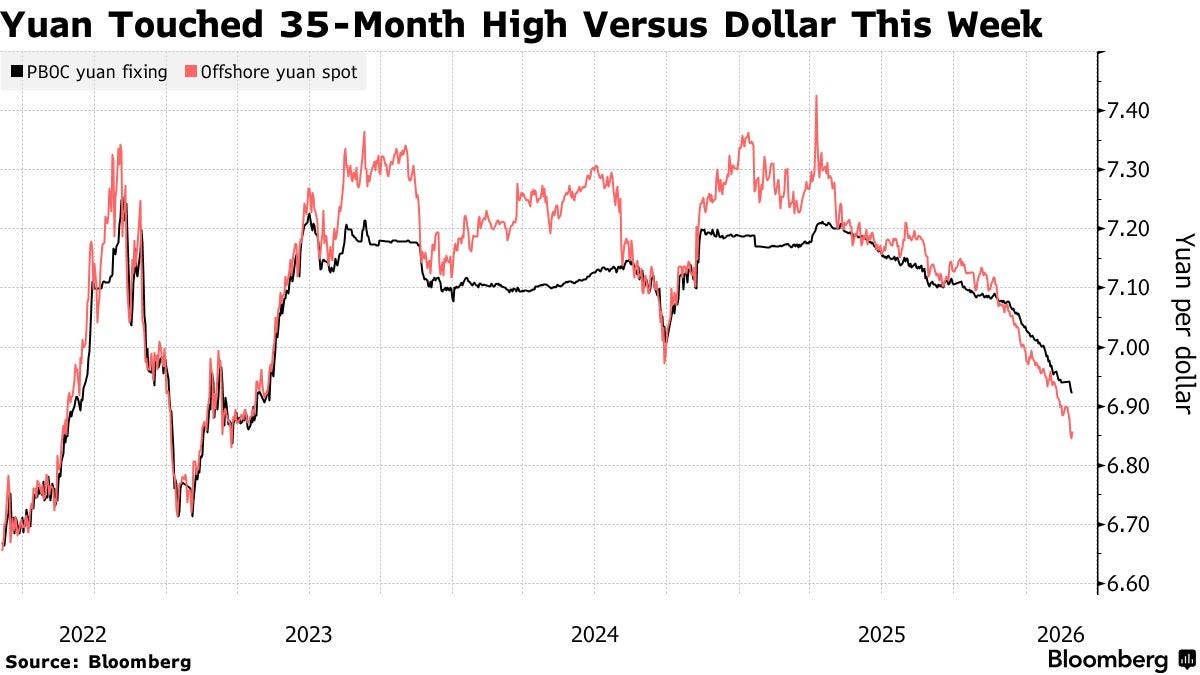
Which BBG reports has seen the yuan end its longest winning streak since 2010.
The onshore yuan edged down 0.1% to around 6.86 per dollar on Friday morning in Shanghai after rallying to the strongest level since April 2023 in the last session. Robust foreign-exchange conversion, an improving US-China relationship, and broad weakness in the greenback have supported yuan appreciation.
The central bank isn’t putting an end to yuan gains, but wants to remind FX traders it doesn’t like seeing dollar-yuan turning into a one-way bet. —Mark Cranfield, Markets Live strategist
BBG - India will build a greenfield airport in the Andaman and Nicobar Islands at a cost of 150 billion rupees ($1.6 billion) and simultaneously extend the runways of two existing military airstrips, a build up aimed at countering China’s expanding presence in the Indian Ocean.
The new airport will be constructed on the Great Nicobar Island, the southern most part of the archipelago, about 40 nautical miles from the Malacca Strait, one of the world’s busiest maritime choke points. The project is located in an ecologically sensitive region.
RTRS - Canadian Prime Minister Mark Carney arrives in Mumbai on Friday on his first official visit to India, hoping to reset the sometimes fractious relationship with the world’s most populous country as he seeks new global alliances.
Carney will meet business leaders in Mumbai and start talks on a comprehensive trade agreement, which is expected to be completed by November, his foreign minister told Reuters. He is scheduled to travel on to New Delhi for talks with Prime Minister Narendra Modi.
Subscriber section contains more more news, corporate updates (including Japan investing in domestic chipmaking), etc., and also BoA seeing record inflow into Korea assets, BoA’s Hartnett on call for pullback in Asia risk assets, FT on US looking to use AI to identify Chinese targets, BoA on Japan Jan machinery orders, and BBG on investors piling into Australian bonds.
The rest of the rundown of major Asian political, economic, and corporate news and analysis from Bloomberg, Reuters, FT, Briefing.com, WSJ, BoA, Goldman, etc., follows for paid subscribers.
