
Markets Update - 3/9/26
Update on US equity and Treasury markets, US economic data, the Fed, select commodities and a look at the upcoming day with lots of charts!

To subscribe to these summaries, click below!
To invite others to check it out (sharing is caring!), here’s the button:
Link to posts on X - Neil Sethi (@neilksethi) / X
Note: links are to outside sources like Bloomberg, CNBC, etc., unless it specifically says they’re to the blog. Also please note that I do sometimes add to or tweak items after first publishing, so it’s always safest to read it from the website where it will have any updates.
Finally, if you see an error (a chart or text wasn’t updated, etc.), always appreciate a note in the comments section or email so I can fix it.
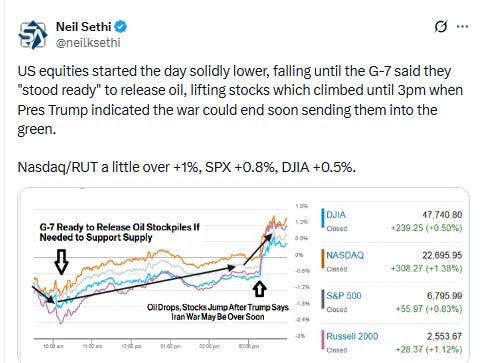
US equity indices opened trading Monday extending last week’s declines after oil prices broke through $100 overnight following Iran appointing a hard line successor as Supreme Leader (see Week Ahead) and Pres Trump saying a gain in “short term oil prices” was a “very small price to pay” for destroying Iran’s nuclear threat. Equities would fall back from those levels for the first 45 minutes until a release from the G-7 (forum consisting of Canada, France, Germany, Italy, Japan, the United Kingdom and the United States) stating that the group “stands ready” to release crude if necessary.
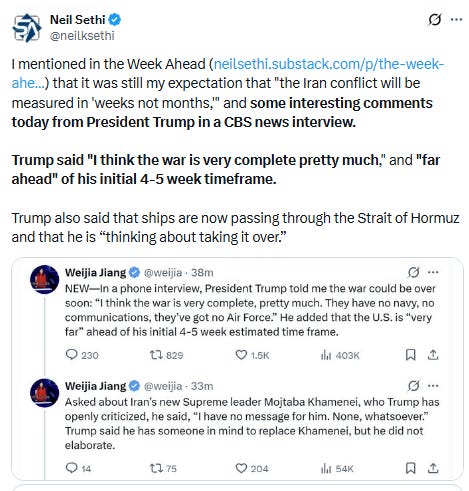
That saw crude prices and Treasury yields soften giving stocks a lift They would continue to cut back losses until 3pm when Pres Trump indicated in a CBS phone interview that “the war is very complete pretty much," and "far ahead" of his initial 4-5 week timeframe. He also said that ships are now passing through the Strait of Hormuz and that he is “thinking about taking it over.”
Following that headline, stocks jumped over 1% as crude sank -15% (it would later recover some of those losses (covered in subscriber section) and Treasury yields dropped (they would end -12bps from the highs (also covered in the subscriber section)). At day’s end the Nasdaq and Russell 2000 would end a little over +1% (the latter rebounding from a -2.5% decline in the morning), SPX +0.8%, and DJIA +0.5%.
Elsewhere, bond yields would end up lower on the day, and the dollar would also reverse to losses. Crude would end up with a modest gain, but natgas would fall into the red. Copper would reverse to gains along with equities as would bitcoin while gold fell back (all covered in the subscriber section with charts).
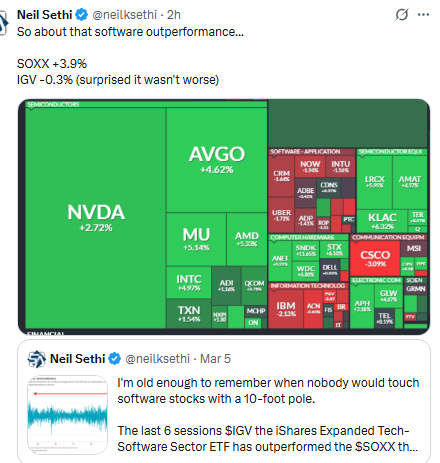
The market-cap weighted S&P 500 (SPX) was +0.8%, the equal weighted S&P 500 index (SPXEW) +0.3%, Nasdaq Composite +1.4% (and the top 100 Nasdaq stocks (NDX) +1.3%), the SOXX semiconductor index +3.9%, and the Russell 2000 (RUT) +1.1%.
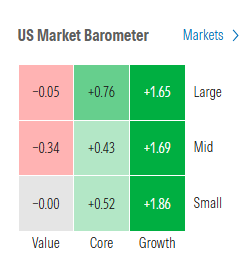
Morningstar style box shows a clear preference for growth today.
Market commentary:
“The market is still kind of pricing that this is going to be rather short-lived,” the portfolio manager and head of fixed income said. However, a quick surge of 10% or 15% in the State Street Energy Select Sector SPDR ETF (XLE) would mean the market is pricing in that the war is “going to take a long time, and there’s a lot of oil supply that’s either stuck or been destroyed.”
“We expect markets to stay very short-term focused, volatile and headline-driven as the conflict plays out this week,” said Carol Schleif at BMO Private Wealth.
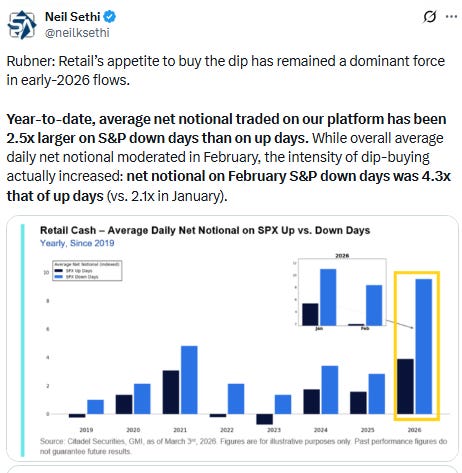
“We see a now-familiar pattern re-emerging,” said Steve Sosnick at Interactive Brokers. “US index futures sell off sharply overnight, recover somewhat as domestic traders rub the sleep from their eyes to find the ‘buy’ buttons on their screens, then after a bit of nervousness around the open, ever-hopeful dip buyers step in.” Sosnick notes the “push/pull” between the real-world issues causing higher oil prices, inflation and growth fears versus the undercurrent of FOMO (fear of missing out) that keeps an underlying bid in stocks and keeps the losses from being catastrophic. “FOMO is labeled as fear, but it’s really greed, and I would assert that there is still plenty of greed out there relative to fear,” he added.
“Although volatility may feel uncomfortable, could rise from here, and possibly cause a near-term drawdown in stocks, volatility in itself tends to be brief when it reaches more extreme levels,” said Anthony Saglimbene at Ameriprise. “And, more often than not, the extreme volatility provides investors with a solid long-term entry point to buy stocks rather than sell.”
From before the late-day headlines from Pres Trump:
“War creates no winners. Only relative losers,” said Que Nguyen, chief investment officer at Research Affiliates. “The only place to hide has been energy.”
“The market is anticipating the worst-case scenario,” said David Kruk, head of trading at La Financiere de l’Echiquier in Paris. “The selloff is all about oil, it’s about the inflation that is deduced from it, it’s about the risk of stagflation.”
“Brent above $100 is a real risk for inflation and the economy,” said Andrea Gabellone, head of global equities at KBC Securities. “The EU economy is the most vulnerable with a double hit from the oil and gas price spike, and let’s not forget, another war closer to home.”
The stock market’s reaction has so far been restrained, with hopes lingering that strikes will remain contained in scope and time, said Wolf von Rotberg, equity strategist at Bank J Safra Sarasin. “We have not yet seen markets capitulate,” von Rotberg said. “As oil infrastructure has been hit over the weekend, a prolonged rise in oil prices becomes more likely and a quick reversal of recent moves becomes increasingly difficult.”
“The US economy and stock market are stuck between Iran and a hard place currently. So is the Fed,” Ed Yardeni wrote in a note. “If the oil shock persists, the Fed’s dual mandate would be stuck between the increasing risk of higher inflation and rising unemployment.”
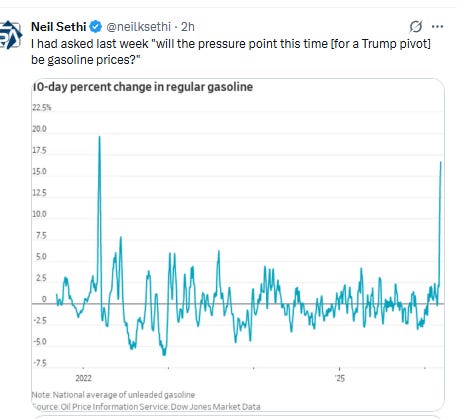
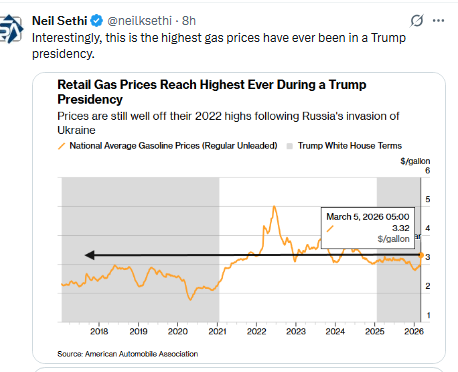
Markets will likely remain volatile this week after tensions escalated in the Middle East over the weekend, with oil prices surging to more than $100 a barrel, according to Carol Schleif, BMO Private Wealth’s chief market strategist. “Triple digit oil prices rapidly translate into sizable increases at the gas pump, which is a dynamic that understandably spooks investors and consumers alike, and is one of the main drivers of this risk-off sentiment,” Schleif said in emailed comments Monday. “We expect markets to stay very short-term focused, volatile and headline-driven as the conflict plays out this week.”
“Investors were hoping cooler heads would prevail in the Iran war this weekend, and instead, tensions escalated, which is exacerbating last week’s stock market declines and oil price spikes,” said Schleif.
“Everyone has become an oil-watcher now, and for the time being at least most other major asset prices are dependent variables, driven by developments in energy prices. In a very real sense, equities prices are oil prices, at least in the short run.” — Cameron Crise, Macro Strategist, Markets Live.
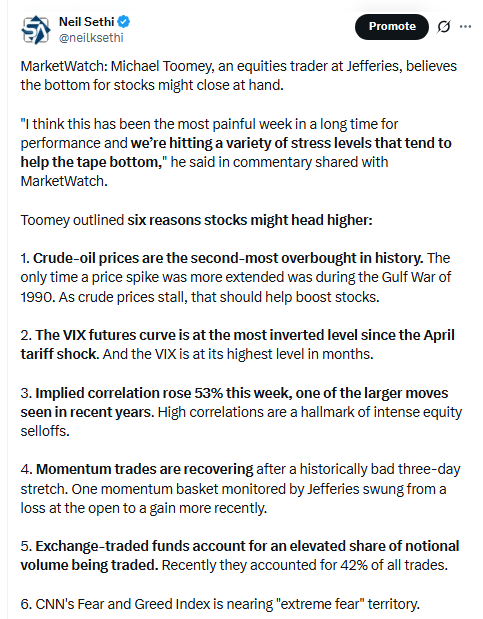
“And one aspect of last week’s market action that may be worth watching this week was the tech sector’s relative strength. If it holds up again this week, it could be a steadying influence on the broader market,” Chris Larkin said in commentary shared with MarketWatch.
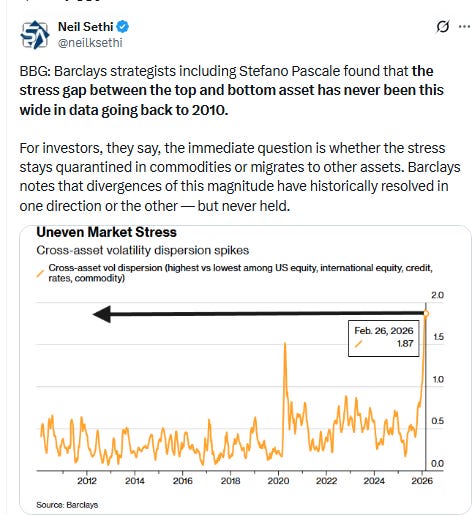
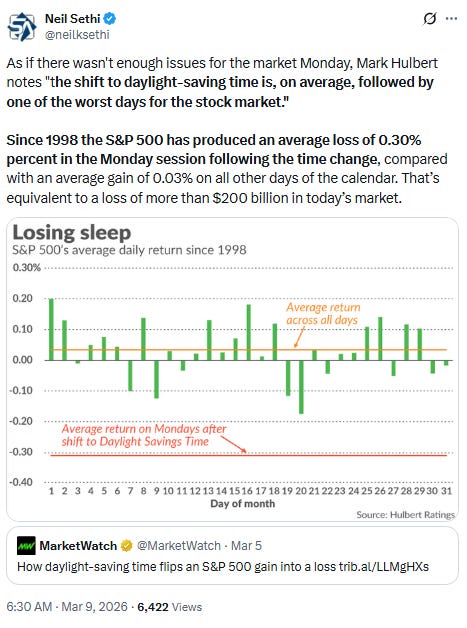
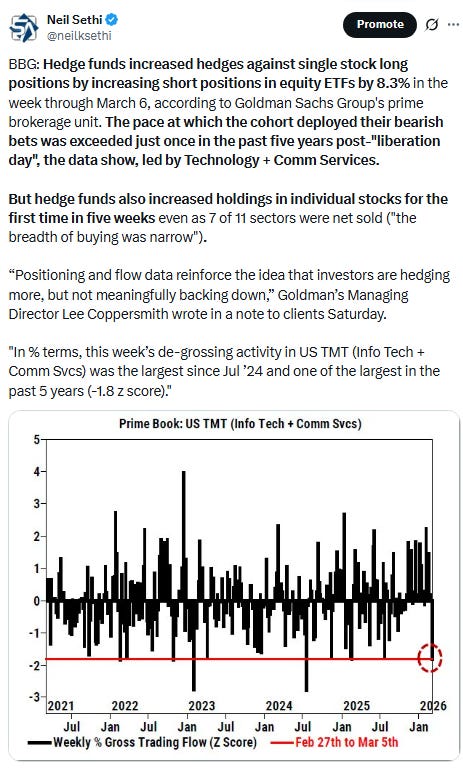
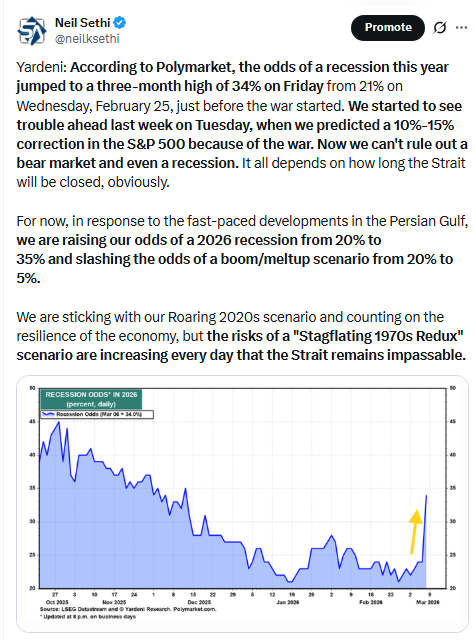
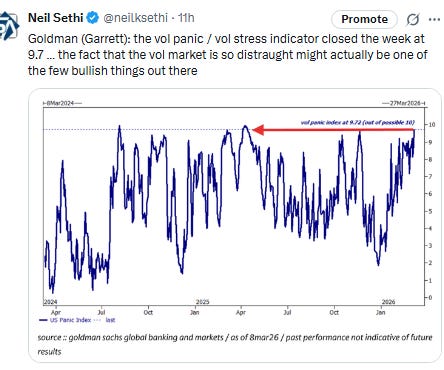
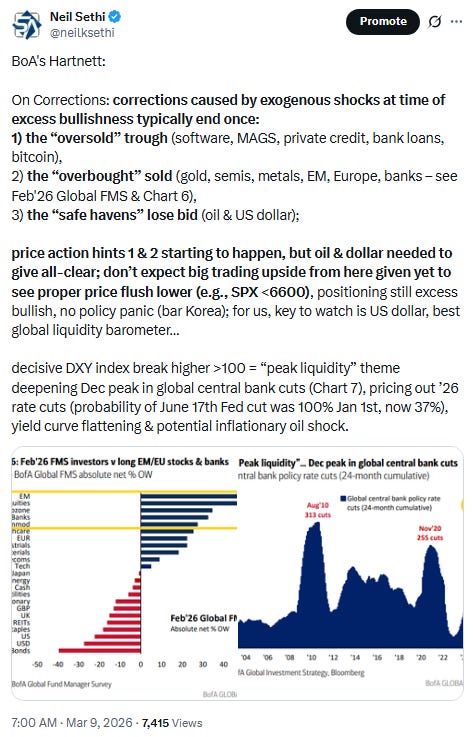
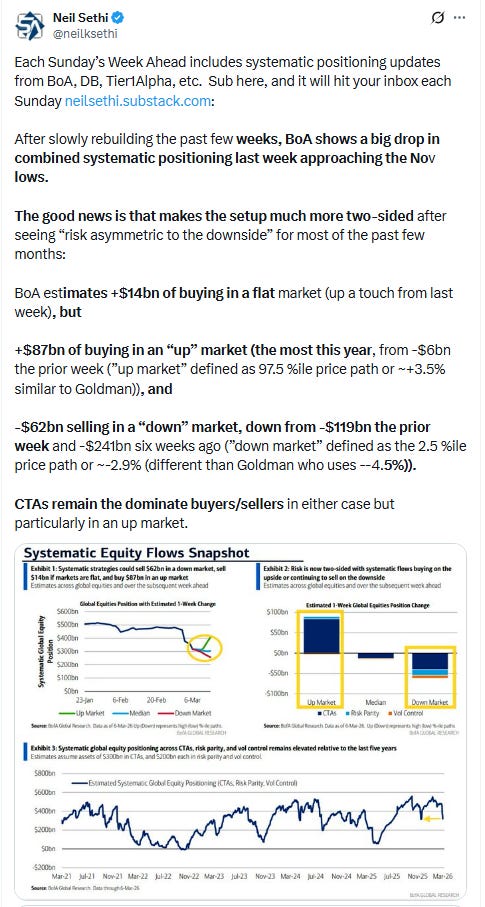
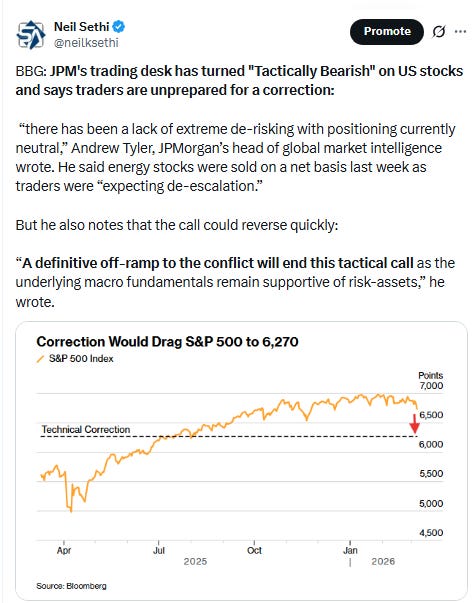
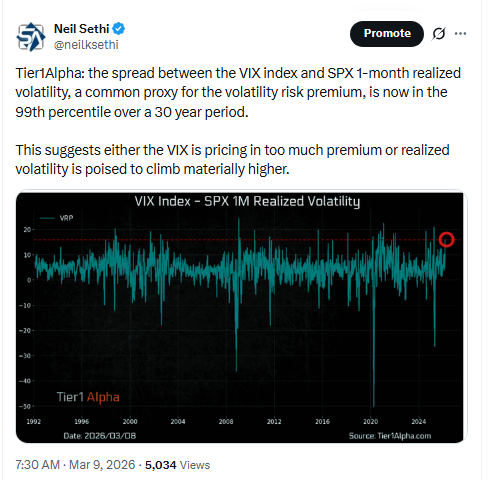
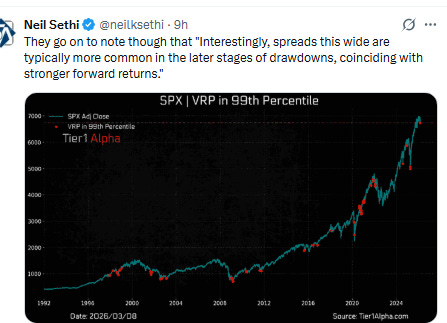
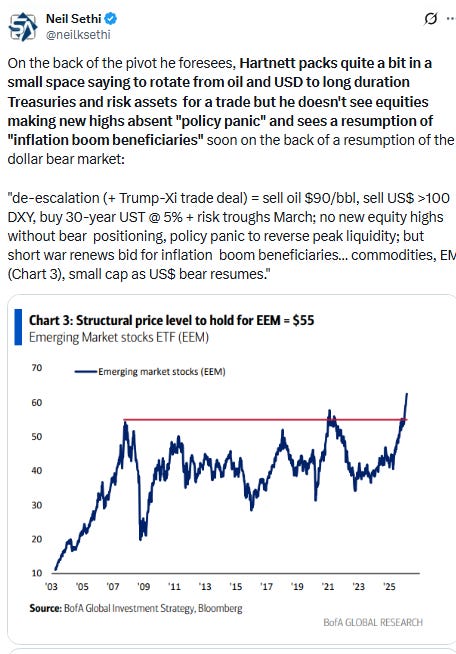
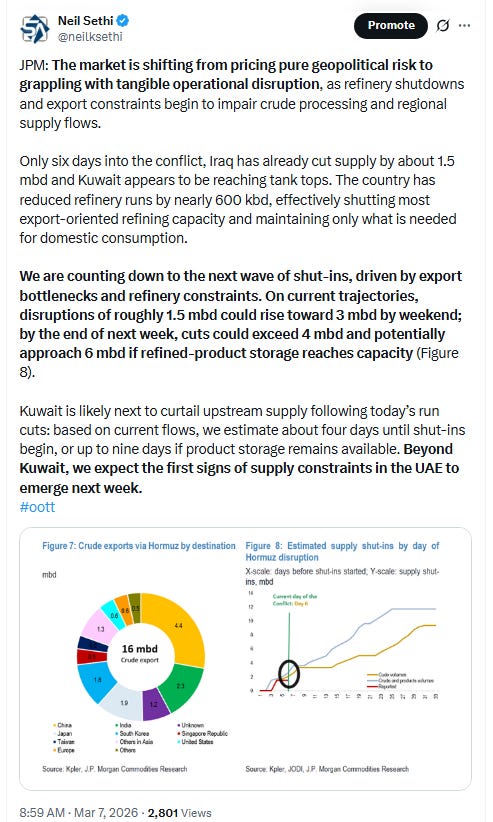
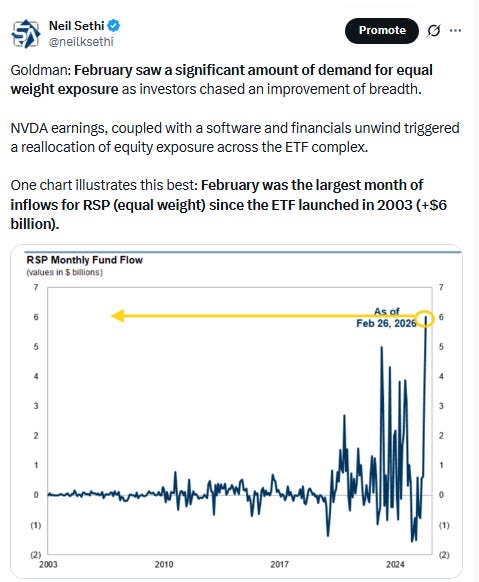
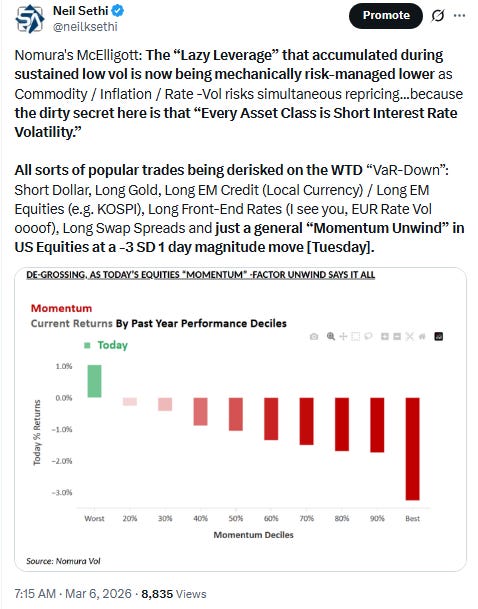
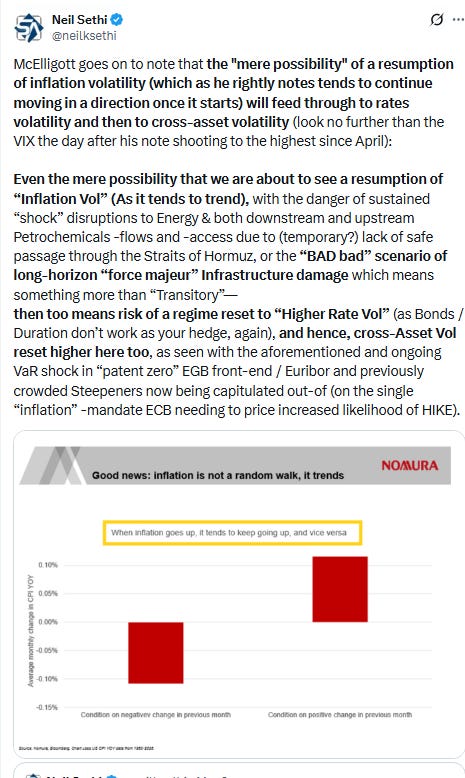
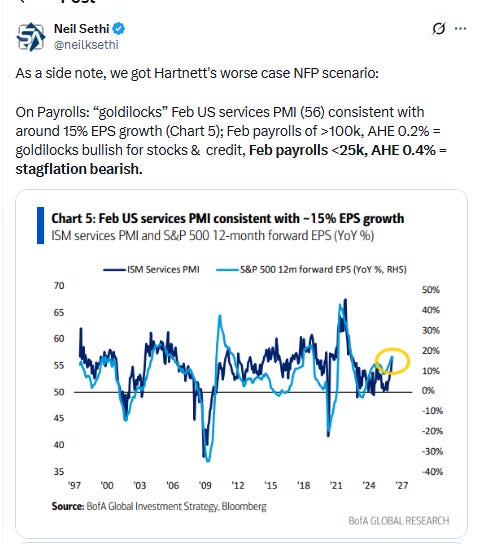
Link to X posts - Neil Sethi (@neilksethi) / X for full posts/access to charts.
In individual stock action:
The broader market was also helped by a rise in semiconductor stocks. Broadcom advanced more than 3%, while Micron Technology and Advanced Micro Devices increased 2% each. Nvidia climbed almost 1%.
Companies making the biggest moves after-hours from CNBC:
None today.
Corporate news from BBG:
Apple Inc.’s artificial intelligence struggles are rippling through its product plans, forcing the company to delay a long-in-the-works smart home display until later this year, according to people with knowledge of the matter.
Anthropic PBC sued the Defense Department for declaring the AI giant posed a risk to the US supply chain, further ramping up a high-stakes dispute with the Pentagon over safeguards on the company’s technology.
Novo Nordisk A/S and Hims & Hers Health Inc. will work together to sell obesity drugs, a sudden reversal after more than eight months of acrimony that culminated in a legal battle.
Live Nation Entertainment Inc. reached a settlement with federal antitrust authorities, the Justice Department said, throwing a wrench mid-trial into an antitrust case that accused the company of illegally monopolizing the live music industry and sought to force a sale of its Ticketmaster subsidiary.
Mid-day movers from CNBC:
In US economic data:
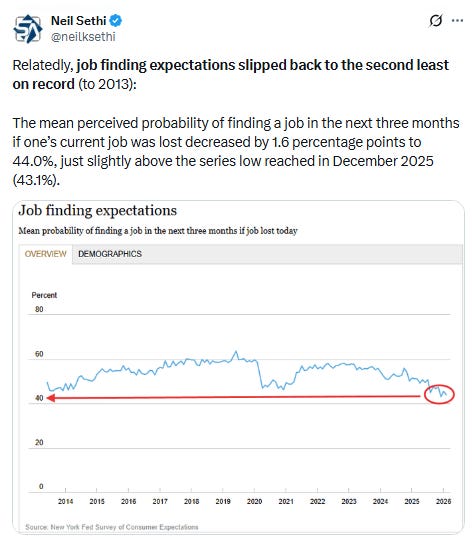
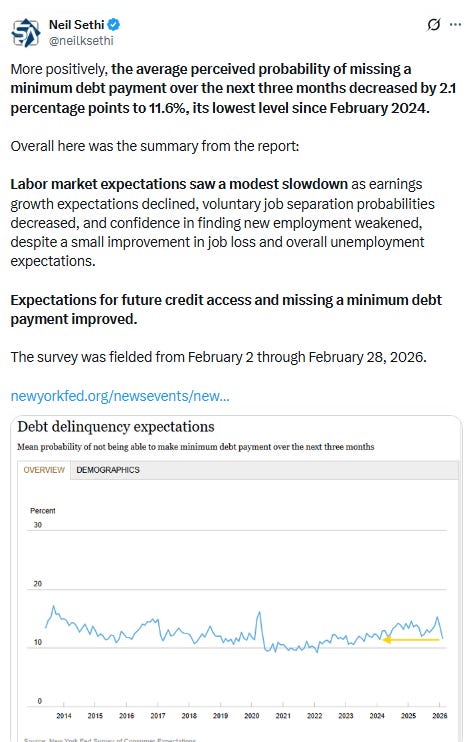
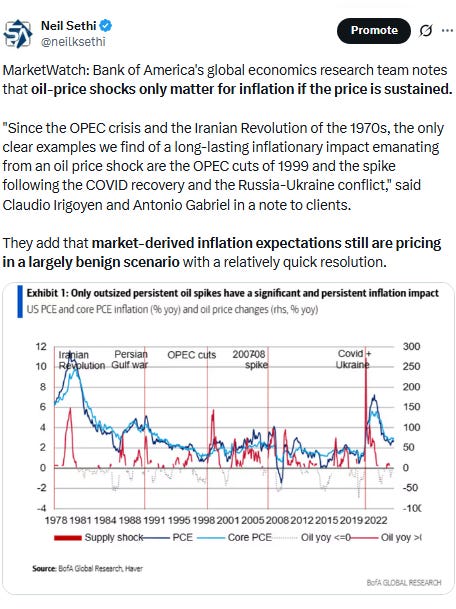
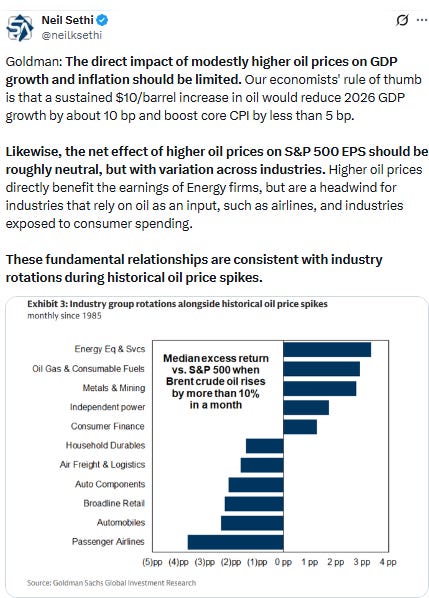
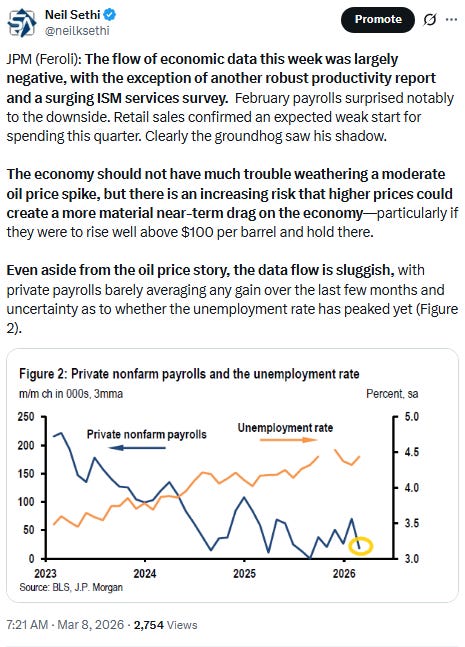
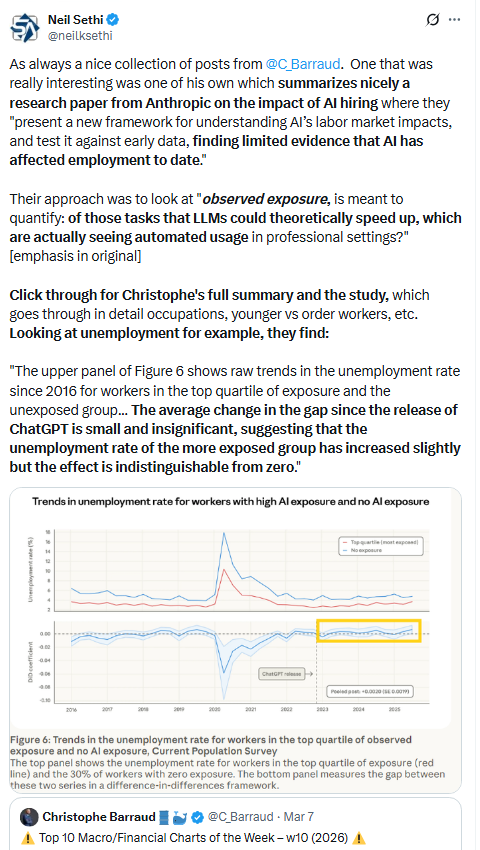
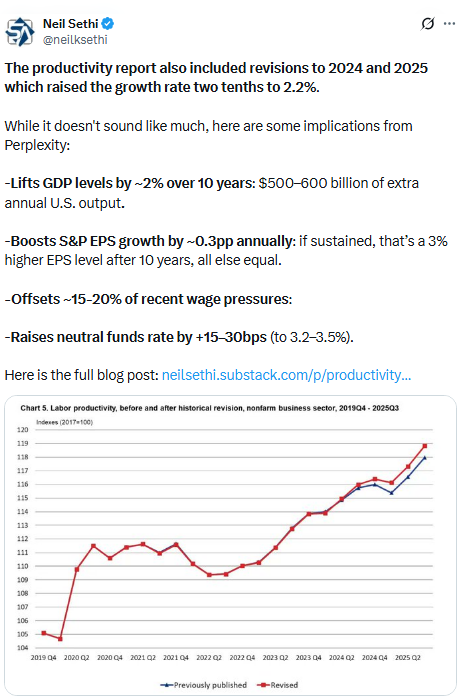
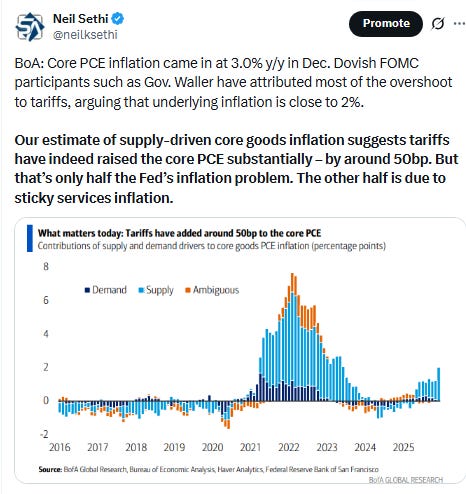
Substack articles.
Link to posts for more details/access to charts - Neil Sethi (@neilksethi) / X
