
Markets Update - 3/25/26
Update on US equity and Treasury markets, US economic data, the Fed, select commodities and a look at the upcoming day with charts!

To subscribe to these summaries, click below!
To invite others to check it out (sharing is caring!), here’s the button:
Link to posts on X - Neil Sethi (@neilksethi) / X
Note: links are to outside sources like Bloomberg, CNBC, etc., unless it specifically says they’re to the blog.
Also, if you see an error (a chart or text wasn’t updated, etc.), always appreciate a note in the comments section or email so I can fix it.
In that regard, I do make mistakes sometimes, and usually I catch them at some point and correct them, and/or I sometimes add new material, so it’s always safest to read from the website where it will have any updates.
US equity indices opened trading Wednesday solidly higher on the back of the developments discussed in last night’s Markets Update, most notably the presentation by the US of a 15-point peace plan. Also, Reuters reports that a senior Iranian official said Pakistan or Turkey could be venues for discussions to de-escalate the war, a rare acknowledgement by Tehran that it was willing to consider diplomatic proposals. The hopes came even as the sides appear to be very far apart and attacks continued overnight (see International Update in this morning’s post for more details).
But equities would fall relatively sharply after Iran’s FARS News Agency reported the message that “Iran does not accept a ceasefire… it is not logical to enter into such a process with those who violate the agreement,” and later state-owned Press TV would add Iran’s conditions for a ceasefire, most (if not all) of which would not be acceptable to the US, including ceeding Iran control of the Strait of Hormuz, the payment of reparations, and guarantees the US and Israel won’t resume their attacks.
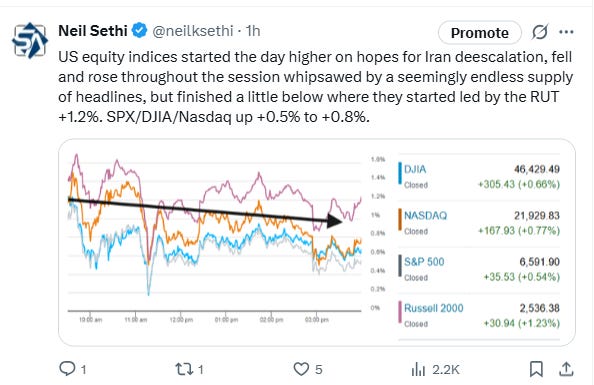
Equity indices would though rebound as the back-and-forth at least indicates that some level of dialogue remains open, although they would finish off the opening levels led by the Russell 2000 +1.2%. The SPX, DJIA, and Nasdaq were up +0.5% to +0.8%.
Elsewhere, bond yields eased off a bit, but crude prices and the dollar would finish higher as would gold (the first time in a week), copper, and bitcoin. Natural gas was little changed (all covered in the subscriber section with charts).
The market-cap weighted S&P 500 (SPX) was +0.5%, the equal weighted S&P 500 index (SPXEW) +0.5%, Nasdaq Composite +0.8% (and the top 100 Nasdaq stocks (NDX) +0.7%), the SOXX semiconductor index +1.2%, and the Russell 2000 (RUT) +1.2%.
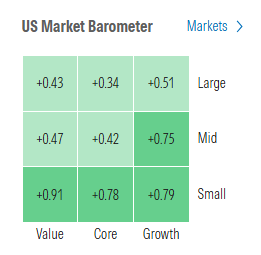
Morningstar style box all green with small caps outperforming.
Market commentary:
“There’s a rebound in risk appetite this morning, which makes sense given the newsflow, but for us this is no time to buy the rally,” said Christophe Boucher, chief investment officer at ABN Amro Investment Solutions. “One can actually feel the algos reacting to the ‘peace’, ‘negotiation’ and ‘ceasefire’ keywords.”
“Clearly on the equities side, there’s a rally on hopes of de-escalation,” said Ross Mayfield, a Kentucky-based investment strategist at Baird Private Wealth Management. “The stock market is happy with the direction, even if it’s a lumpy path toward a conclusion.” Even if there is a de-escalation in the military conflict, however, “you could still have, for the foreseeable future, a war premium in the price of oil that reflects the destruction to production in the region,” he said in a phone interview.
“There’s really no way to know at this point what the facts are regarding the state of negotiations, so expect more whipsaw action as things continue to progress,” said Bespoke Investment Group strategists. “While Iran still holds some cards, the chips are stacked heavily against them.”
“While there remain questions over who in Iran can curtail military activities as well as what will satisfy Israel interests, the market seems to be expressing a view that it wants to bounce higher from here,” said JPMorgan’s trading desk in a note. “Also, it is unclear that Iran would drop previous requests, including security guarantees against future aggression and reparation/compensation for losses incurred during this conflict.”
It’s important for investors to not get overly bearish, especially during geopolitical events, which are volatile and can change course at any time, according to Paul Stanley at Granite Bay Wealth Management. “Any additional indication of a de-escalation of tensions may spark a risk-on move,” he said. “Stocks have a tendency to recover faster than expected from geopolitical events, even if it doesn’t feel like that in the moment.” Stanley also notes that markets may remain volatile for the next several weeks until earnings season begins in mid-April, as that may help investors refocus back to fundamentals, the economy and artificial intelligence.
“Markets are positioning for a conflict resolution, despite lingering strategic ambiguity,” said Elias Haddad at Brown Brothers Harriman & Co. “Ultimately, Iran’s response to the US de-escalation pivot will decide whether peak fear is behind us or still ahead.”
The market is “begging for some clarity on the direction the war is heading in,” Keith Buchanan, senior portfolio manager at Globalt Investments, said, noting that the interest rate outlook for the Federal Reserve is “most vulnerable” if the war drags on. “If oil is higher for longer, then I think it comes all back to inflation expectations and the Fed, and if restrictive policy is in place for a very long time, that’s the underpinnings of a lot of optimism that was built into the market coming into this year,” he continued.
“There should be a degree of skepticism around the commodity pullback, but it is also worth remembering that a return to pre-conflict optimism in European equities will be difficult if yields remain elevated.” — Skylar Montgomery Koning, macro strategist.
What really matters is whether Iran continues to hit critical energy infrastructure or shipping in the Strait of Hormuz, said Matt Gertken, chief geopolitical and U.S. political strategist at BCA Research. If Iran refrains from further strikes against critical energy infrastructure over the next few days, Gertken told MarketWatch that he believes it would be “quietly embracing Trump’s offer of talks.” But if Iran resumes such strikes, then Trump will “need to make a new show of force, oil will spike again and equities will fall, and investors will need to prepare for another round of panic in the markets.”
“Current valuations don’t necessarily suggest that markets are cheap but could be consolidating as earnings play catch-up to previously ballooned stock prices,” said Lukman Otunuga, senior market analyst at FXTM. Investors are no longer wowed by the potential of artificial intelligence as much as by the final payoff, which could mean more compression in valuations down the road, especially when factoring in the prospect of higher interest rates and negative market sentiment due to the Iran conflict, Otunuga told MarketWatch.
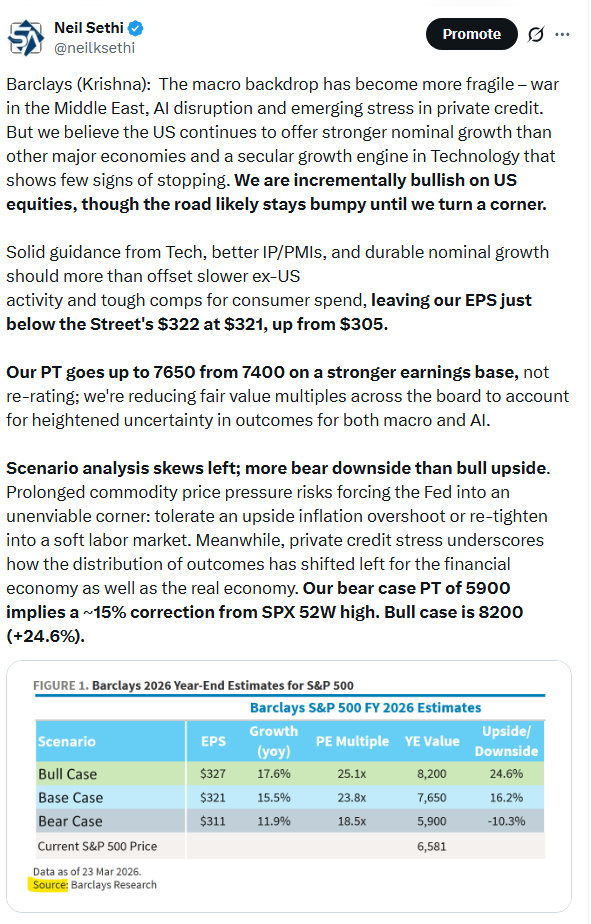
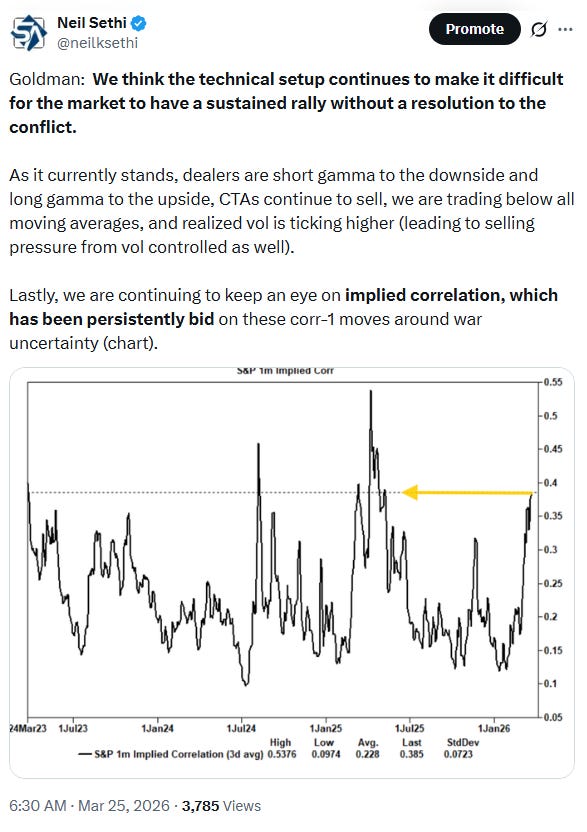
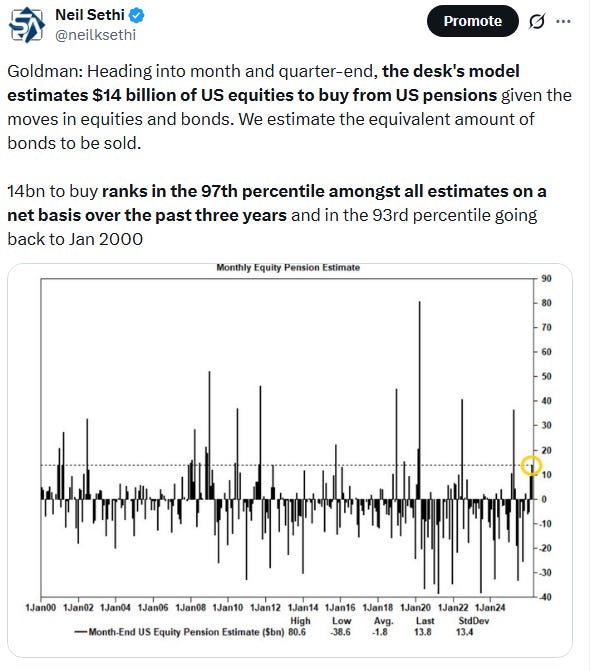
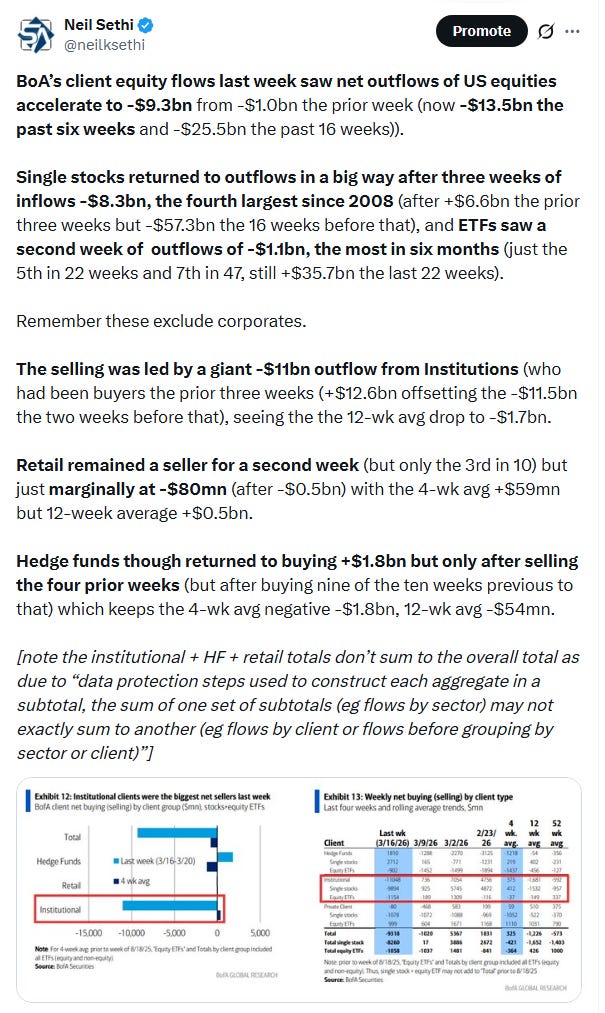
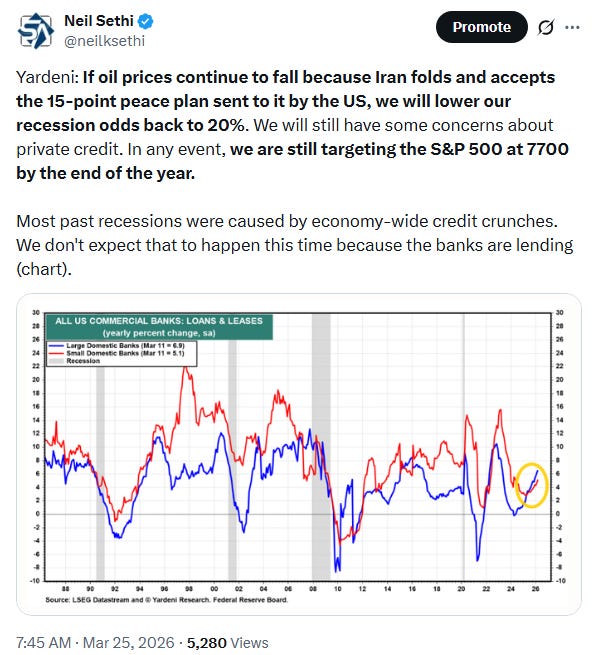
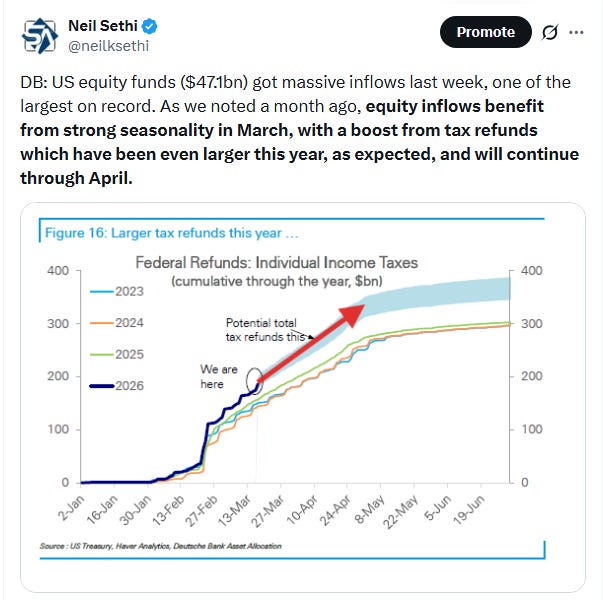
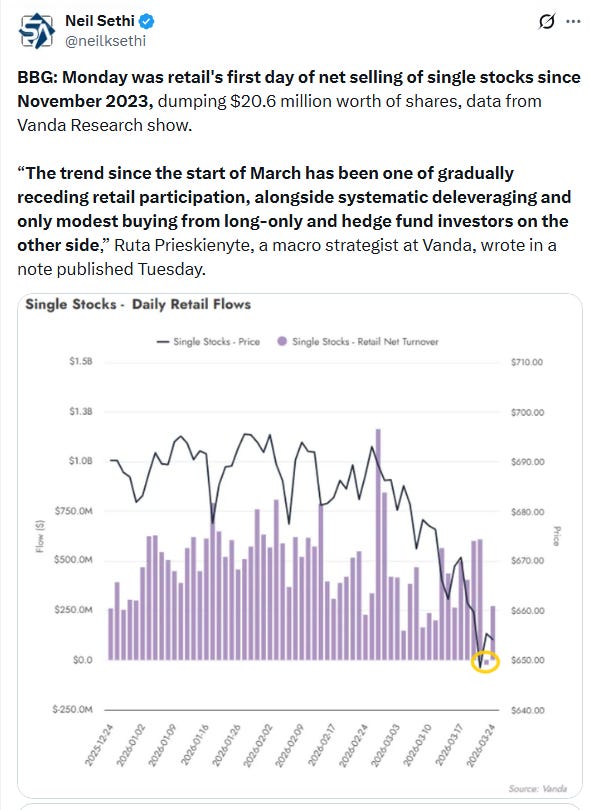
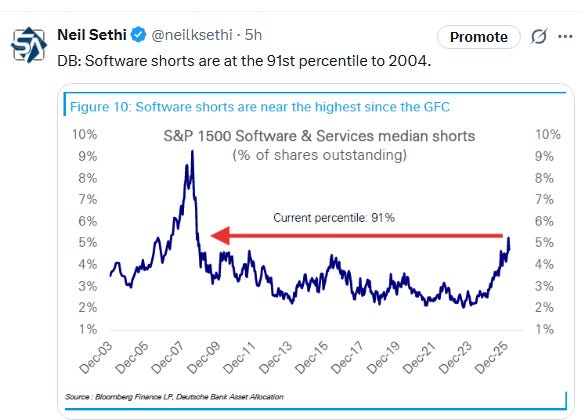
Link to X posts - Neil Sethi (@neilksethi) / X for full posts/access to charts.
In individual stock action:
Gains in shares of technology supported the broader market Wednesday, with Nvidia, AMD and Intel all seeing solid gains.
Meta Platforms Inc. and Alphabet Inc.’s Google must pay damages to a 20-year-old woman who said her addiction to social media caused her mental health struggles, a jury concluded in a landmark decision that could signal hefty risks for the companies as they fight thousands of similar claims. Shares still finished with modest gains.
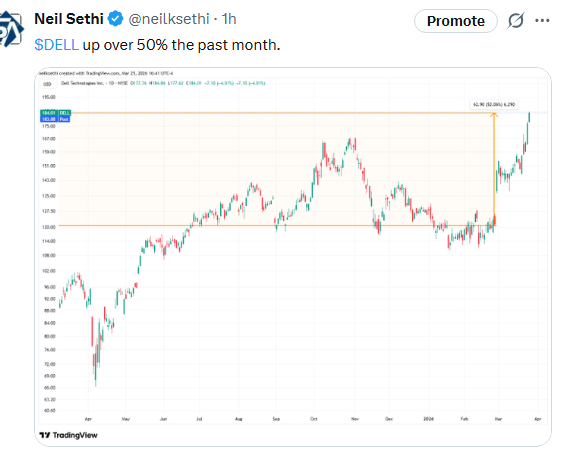
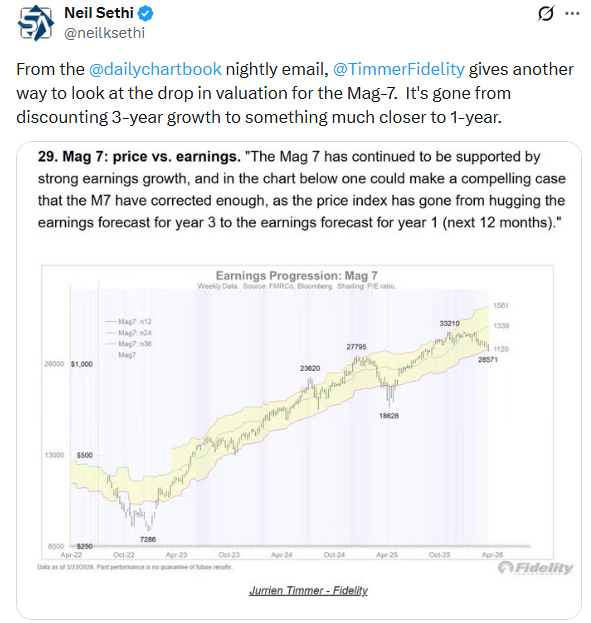
Corporate news from BBG:
JetBlue Airways Corp. is considering the option of selling itself to a competitor, Semafor reported, citing people familiar with the matter.
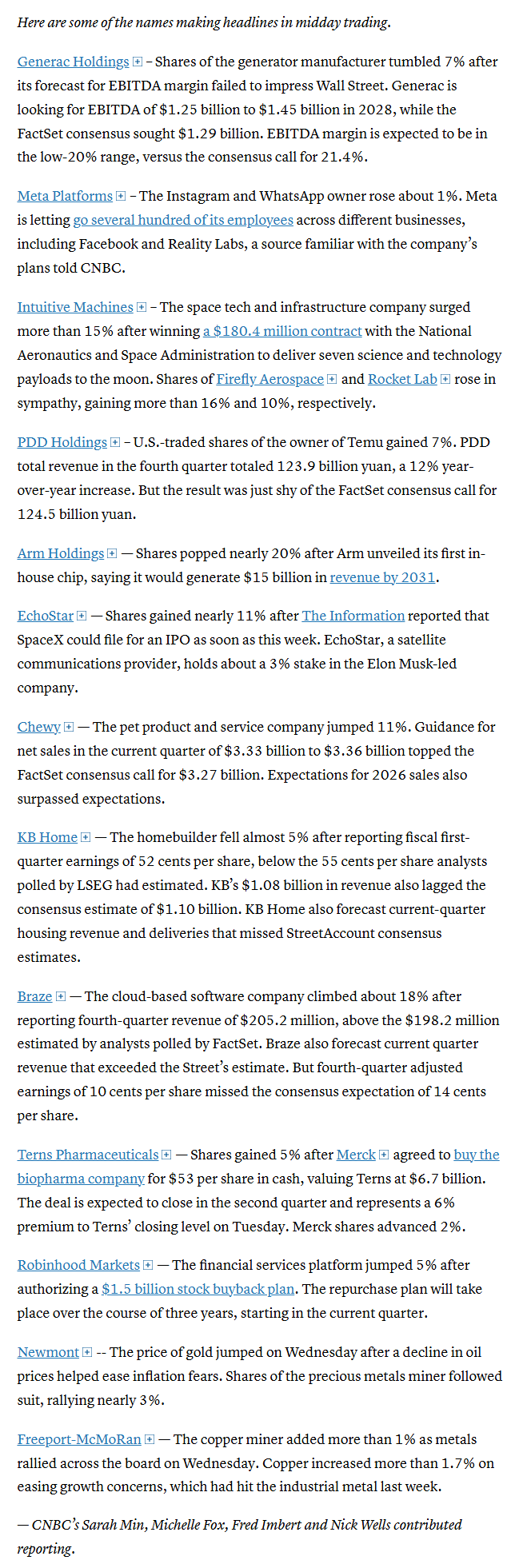
Meta Platforms Inc. is cutting several hundred jobs as part of a restructuring effort that’s impacting several teams at the company, including sales, recruiting and the Reality Labs hardware division.
Arm Holdings Plc, which made its name licensing technology to semiconductor makers, said it will sell its own chips for the first time — a move forecast to generate about $15 billion annually within five years.
Merck & Co. agreed to buy Terns Pharmaceuticals Inc. for $6.7 billion, giving the multinational company access to a promising new leukemia treatment as it faces the patent expiration of its bestselling cancer drug.
Mid-day movers from CNBC:
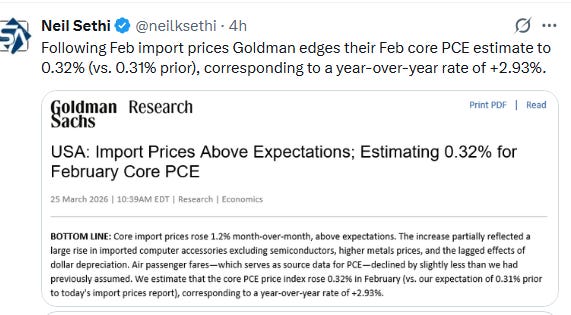
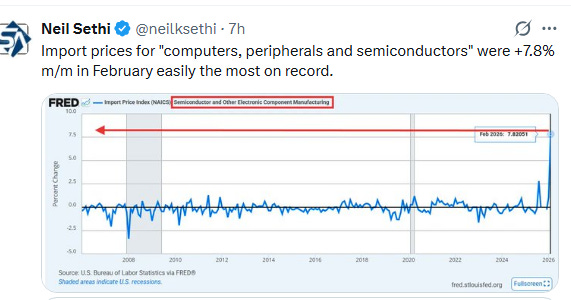
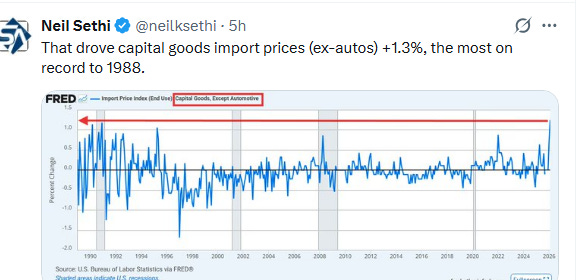
In US economic data:
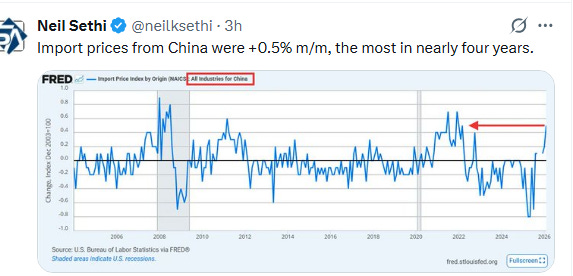
Substack articles - Note the productivity update was NOT emailed out.
Link to posts for more details/access to charts - Neil Sethi (@neilksethi) / X
